Overview of Canada

Study in Canada

Canada is known for its quality education & competitive entry requirements. A Canadian Degree/Diploma is recognized across the globe. If you have decided to study in Canada from Nepal, you will be charged lower tuition fees than counterparts in competing countries. Every year a million students worldwide travel Canada for better education. Students are eligible to work off campus without a work permit for upto 20 hrs per week & full time during vacation.


Why Study in Canada?

Academic excellence. One of the most important reasons why students choose to study in Canada is because of the high quality of education. When a student receives a degree from a Canadian university, it acts as a mark of trust and excellence.

Study what you love, you’re interested in and with the top experts in their fields. Get your first true taste of independence and freedom, build self-confidence, experience all aspects of student life, broaden your horizons and meet new people.


Natural beauty, wide-open spaces, mountains, trees, and lakes. Free society with fundamental human rights enshrined in a Charter of Rights and Freedoms. Political stability with excellent business opportunities and a strong banking system. Free trade with United-States and Mexico under NAFTA agreements.


Ranking

According to Times Higher Education’s World University Rankings 2023, 32 Canadian institutions are ranked among the top universities in the world. Over 20 Universities Hold place in QS Ranking.

Student Satisfaction

Canada has an easy VISA policy and offers many benefits for international students, such as a work permit post-graduation for up to 18 months. Better partime jobs for International Students. Current immigration regulations permit students to work part‐time 20 hours a week during term time and 40 hours a week during holidays.

Quality of Life

One of the most sought after countries for higher education for overseas students. High quality education topped with internship opportunities, in addition to liberal government policies related to post-study work and immigration, creates a perfect combination for Indian students. Additionally, to assist and uplift international students, many universities offer fully funded scholarships.

Employability

Canada currently has over a million job vacancies and keenly seeks talented individuals to add to the job sector. There are tons of part-time opportunities.

Everything you need for your Canada Dream

Personalized Guidance

Plan of action customised for your interests and goals

IELTS Coaching

Get online IELTS training by Nepal's top trainers.

University Shortlist

Get a personalised list of university and courses based on your profile

Visa Assurance

Our visa counsellors help you get an admit with 98% success rate

Everything about Study in Canada

Intake

 
  • The main Intakes are September and January.
  • There is a limited May intake as well.
 

Cost of Study

Program Canada
2 Years Diploma 9-12 Lakhs INR
3 Years Adv. Diploma 10-12 Lakhs INR
2 Years Master 15- 18 Lakhs INR
1 Year PG Diploma 11-12 Lakhs INR
Living Exp. In Canada Approx.: 700-800 CAD/Month
Work while you study
During School During Holidays
20 hours / weekPart time 40 hours / weekFull – time
If you work while studying in Canada, you can easily pay for your own living expenses – and most Indian students in Canada work alongside college.

Addmission Requirement

  • For High ranked universities, student need to have 60%‐70% in Graduation.
  • For Middle ranked universities, student need to have 55‐65% in Graduation. Very few universities accepts the students having 50% and above in Graduation
  • Students who do not meet academic criteria can apply for Masters through various pathways by applying Pre‐Masters leading to Masters.
IELTS Requirements: IELTS requirement for Masters programmes ranges from 6.0‐6.5 with no band less than 5.5 depending upon the course and the University. In order to get an admit to a university/college, and also for the student visa, it is compulsory to give an English language proficiency test such as IELTS or TOEFL or Duo Lingo.
For Degree and Diploma Programs
IELTS Minimum overall score of 6.5, with no individual band less than 6.0
TOEFL Minimum score is between 70-90 based on institute
For High ranked Universities, student need to have 70‐80% in 12th . For Middle ranked Universities, student need to have 60‐70% in 12th . Very few universities accepts the students having 50% to 55 % in 12th. Students who do not meet academic criteria can apply for graduation programmes through various Pathways by applying for Diploma leading to second year of bachelors or Foundation course leading to first year of bachelors. IELTS Requirements: IELTS requirement ranges from 6.0‐6.5 with no band less than 5.5 depending upon the course and the University.

Student Visa

If you are aspiring to Study in Canada for more than six months, you definitely need to apply for a Study permit.It is best to apply for a Study permit at least four months before your classes start.

You will need documents like Letter of Acceptance from your Designated Learning Institution, a valid passport, Identity Proof, Financial Statement, Medical Information, and SOP.For Quebec Institutions, a Quebec Acceptance Certificate(CAQ) is required.

You can apply for a Study permit online via https://www.cic.gc.ca/, or you may also apply offline at your nearest Visa Application Centre. Ensure that your application is complete with all the documents uploaded in. We suggest spending enough time drafting your SOP as a lack of clarity in SOP might lead to rejection of Study permit.


VISA Procedure

As Nepal’s top consultancy for studying in Canada, we make the visa process straightforward. Our experts guide you through every step—handling documents, applications, and interview prep. Rely on us to secure the visa you need for a seamless start to your academic journey in Australia.

Speak with Our Education Counselor

Choose Your Course and Apply

Complete Required Language Test

Submit Required Documents

Apply and collect your NOC

Prepare for GTE documents

Pay tuition fee

Book Medical tests

Lodge your visa application

Book and provide Biometrics

Receive visa

Monthly Living Expenses

Manage your budget smartly while studying in the Canada from Nepal. We’re here to guide you through the average monthly living costs, covering housing, food, transportation, and other essentials. As Nepal’s top consultancy for the Canada, we ensure you make informed financial choices for a smooth and affordable experience. Begin your journey with confidence and clarity!

Rent

$1,800 – $2,900 CAD per month

Food

$400 – $1,200 CAD per month

Transport

$50 – $200 CAD per month

Miscellaneous

$35 – $150 CAD per month

Tests Required to Study in USA

IELTS
  • IELTS scores are accepted by about 4,000 universities and colleges in the US as evidence of an applicant’s English language competency. Depending on the courses and universities, IELTS minimum requirements in the US range from 6 to 7+ band.
  • Writing, listening, reading, and speaking are the four sections of the examination where applicants’ fluency is examined. A good score in IELTS may be the key to admission to prestigious colleges like Harvard, but without the right guidance scoring, 7+ isn’t simple.
  • SAL’s IELTS Class has helped Thousand’s of students with mock tests, resources, and knowledge directly from the experts.
 
  • The TOEFL, or Test of English as a Foreign Language, is one of the most well-known language exams.
  • Depending on their choices, students can choose to take the TOEFL offline or online.
  • The prerequisites for the TOEFL online exam might range from 71 to 92 points, depending on the subject and university you choose. However, it would help if you got higher marks for a Ph.D.
  • PTE is becoming more well-known and has already received recognition from 785 American colleges and institutes.
  • Due to its straightforward registration procedure and exam structure, PTE is growing in popularity. The test’s results are typically ready in 48 hours.
  • The minimum PTE score is 54. However, it may change depending on the university and course you apply for.
 

The beauty of Canada lies in its multiculturism. Though the French and the

English are more in number, Canada is a land of Immigrants.

Popular Cities:

  • Toronto, Ontario
  • Vancouver, British Columbia
  • Calgary, Alberta
  • Ottawa, Ontario
  • Montreal, Quebec
  • Victoria, British Columbia
  • Quebec City, Quebec
 

Currency : Canadian Dollar

Canada is one of the highest industrialized countries of the world. Further, its economy is highly diversified. Northern Canada is known for gas and oil exploration while Eastern Canada is known for agriculture, forestry and fisheries.

The provinces of Ontario and Quebec are known for industries. Canada is a world leader in Aerospace, Pharmaceuticals, Telecommunication and Biotechnology. Currency is Canadian Dollar. Almost 80% of the population of Canada lives within 250 kilometers of border with the U.S.

Popular Universities to Study in Canada

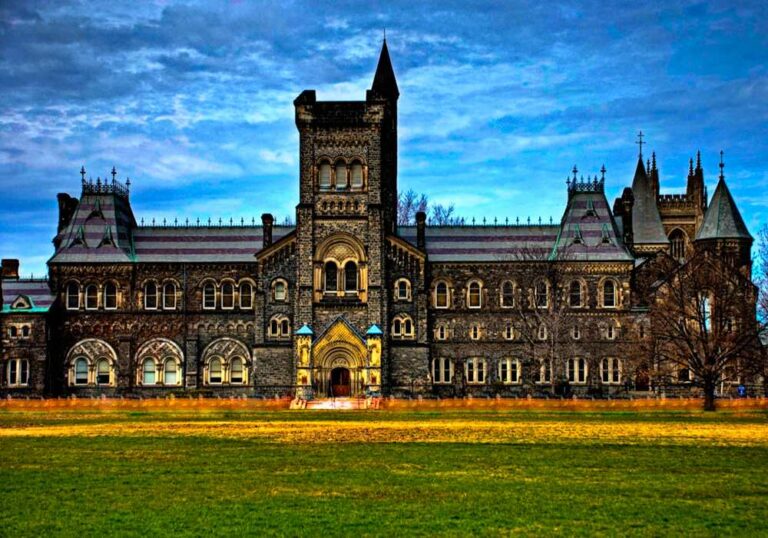
University of Toronto

The University of Toronto is a public research university in Toronto, Ontario, Canada, located on the grounds that surround Queen’s Park. It was founded by royal charter in 1827 as King’s College, the first institution of higher learning in Upper Canada.

The University of British Columbia

The University of British Columbia is a public research university with campuses near Vancouver and in Kelowna, British Columbia. Established in 1908, it is British Columbia’s oldest university. The university ranks among the top three universities in Canada.
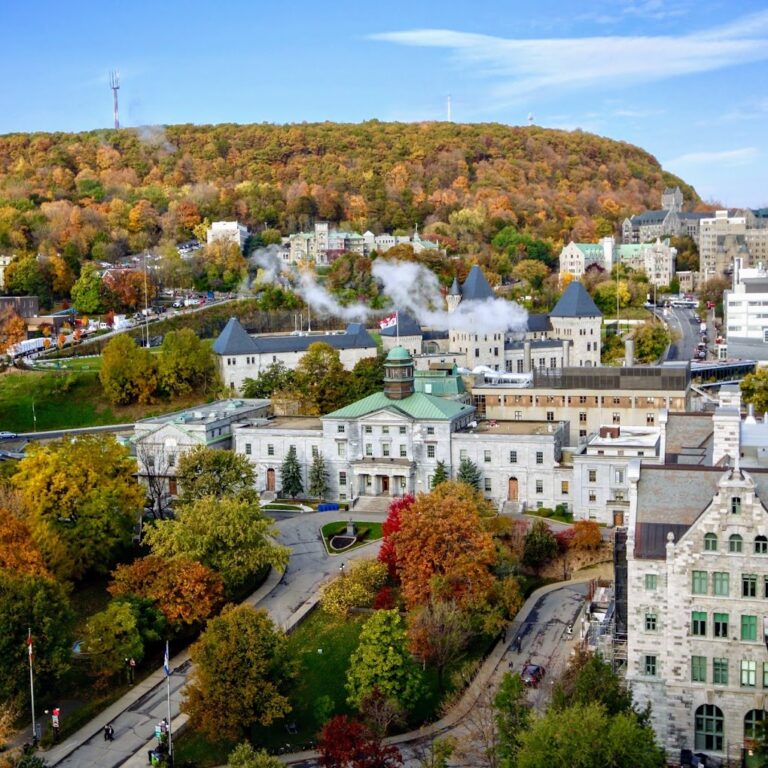
McGill University

McGill University is an English-language public research university located in Montreal, Quebec, Canada.
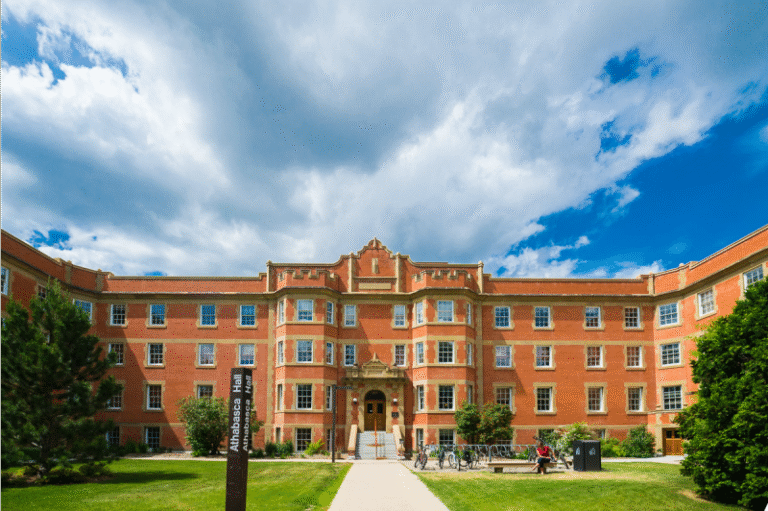
University of Alberta

The University of Alberta, also known as U of A or UAlberta, is a public research university located in Edmonton, Alberta, Canada. It was founded in 1908 by Alexander Cameron Rutherford, the first premier of Alberta, and Henry Marshall Tory, the university’s first president.


Frequently Asked Questions (FAQs)

1. How much does it cost to study in Canada?

Tuition fees for international students range from CAD 15,000 to CAD 35,000 per year, depending on the program. Living costs average CAD 10,000 to CAD 15,000 annually.


Yes, students can work up to 20 hours per week during the semester and full-time during holidays. This helps offset living expenses and gain work experience.


Yes, Canada offers numerous scholarships for Nepali students, including those provided by the Canadian government, universities, and private organizations.


Most universities require proof of English proficiency through tests like IELTS or TOEFL. Some programs may also accept French proficiency for Francophone institutions.


Our

Partners