Study in Ireland

Studying in Ireland has become an increasingly appealing option for Nepali students, thanks to the country’s world-class universities, cutting-edge research facilities, generous scholarship schemes, post-study work opportunities, and flexible, skills-focused programmes. Ireland’s higher-education landscape encompasses more than 20 publicly funded institutions—including research-intensive universities, technological universities, and institutes of technology—offering stimulating, innovative learning environments at undergraduate, postgraduate and doctoral levels.

Why Study in Ireland?

Ireland is steadily gaining recognition as a top destination for higher education. Several Irish universities consistently rank among the top institutions worldwide, reflecting the country’s growing academic reputation. But is quality education the only reason students are drawn to Ireland? Not at all! Here’s what makes Ireland an increasingly popular choice for international students:

Ranking

Ireland has some of the finest universities the world has ever seen. Want to study at one of the best universities in Ireland? Data collected by the Times Higher Education’s World University Rankings 2019 present the top-five universities in the Republic of Ireland.

Student Satisfaction

Ireland has a lengthy history of welcoming international students for more than 1000 years. Ireland was a beacon of learning, and students from around the continent travelled to study in Ireland monasteries in the 7th century. For the past 50 years, Ireland has been a location of opportunity for students worldwide, including Europe, the Gulf, North America and Asia.

Quality of Life

The Irish are proud of their country and their culture and they are happy to share it with you. Although it’s a relatively small country, (with a population of around five million), more than 70 million people around the world claim to have Irish heritage. So once you’ve lived in Ireland, you’ll have friends all over the world.

Employability

You can work up to 20 hours per week with an Irish visa, which might be a fantastic opportunity to earn additional money and cover some of your living and educational costs. Many leading global companies are located in Ireland, and career opportunities are plentiful. It is especially good for careers in Software Development and IT, Engineering, Financial Services, Food and Agriculture, Medtech and Pharma.

Everything you need for your Ireland Dream

Personalized Guidance

Plan of action customised for your interests and goals

IELTS Coaching

Get online IELTS training by Nepal's top trainers.

University Shortlist

Get a personalised list of university and courses based on your profile

Visa Assurance

Our visa counsellors help you get an admit with 98% success rate

Everything about Study in Ireland

Intake

 
Autumn Intake/Semester 1Spring Intake/Semester 2
Autumn Intake/Semester 1 in Ireland begins in September.Spring Intake/Semester 2 commences in January or February.
Autumn intake application deadline – June/JulySpring intake application deadline – September / October
The majority of the Irish universities start with their courses in Autumn Intake.The courses offered at the Irish Universities during the Spring intake is fewer as compared to the Autumn Intake.
 

Cost of Study

 Yearly Tuition Fees 
For Bachelor’s €7000-20000
For Master’s €9000-17000
 Yearly Living Cost 
In Dublin€8,000-12000
  

Work while studying:

During StudyDuring Vacation
20 hours/week Part time40+ hours a week Full time /

Salary for Part time jobs at 9 – 12 EUR/hour


Admission Requirement

For each course, a minimum academic score of 60% and above in Standard XII is required. Foundations and Diploma programmes are available for students who have secured around 50%. The student should have completed 18 before joining a degree program. It is important to remember that even though the entry requirement is lower at Irish universities, the education standard is not. Hence, you should carefully enhance your ability to cope with the high standard of education over the course of the next few years beforehand.

The documents to be submitted are:

  • Academic Transcripts: Mark Sheets of Standard X, XII, and the bachelor’s degree (if applicable)
  • Internet-based TOEFL or IELTS scores
  • If you have work experience, then two letters of recommendation (LOR) from the employer/manager who knows you well and can comment on your professional abilities
  • Statement of Purpose (SOP)
  • Academic Resume
  • Portfolio (in case of students applying for art and design courses or architecture programs)
  • Others (Certificates/achievements at the state and national level and extracurricular activities)
  • Proof of funds
  • Health insurance
  • A copy of your passport
 

Student Visa

 
You should apply for your Irish study visa as early as possible, as it normally takes eight weeks or longer to process. You can apply up to three months before you arrive. You must submit the required documentation, passport photograph and appropriate fee for the correct visa type, to the correct offices. You may also be required to provide biometrics information.
 

VISA Procedure

As Nepal’s top consultancy for studying in Ireland, we make the visa process straightforward. Our experts guide you through every step—handling documents, applications, and interview prep. Rely on us to secure the visa you need for a seamless start to your academic journey in Ireland.

Speak with Our Education Counselor

Choose Your Course and Apply

Complete Required Language Test

Submit Required Documents

Courier your documents, if the university needs it

Get accepted at institutions

Apply and collect your NOC​

Book for visa interview

Give your interview and receive visa

Monthly Living Expenses

When studying in Ireland from Nepal, managing monthly living expenses is key. As Nepal’s top consultancy for Ireland, we offer valuable insights into the cost of living there. Plan your budget smartly with our guidance on essentials like housing, food, transport, and daily needs, so you’re well-prepared for every aspect of your time abroad.

Rent

€400 - €900 per month

Food

€590 per month

Transport

€68 per month (Student Leap Card)

Miscellaneous

€100 per month to €150 per month

Tests Required to Study in USA

IELTS
  • IELTS scores are accepted by about 4,000 universities and colleges in the US as evidence of an applicant’s English language competency. Depending on the courses and universities, IELTS minimum requirements in the US range from 6 to 7+ band.
  • Writing, listening, reading, and speaking are the four sections of the examination where applicants’ fluency is examined. A good score in IELTS may be the key to admission to prestigious colleges like Harvard, but without the right guidance scoring, 7+ isn’t simple.
  • SAL’s IELTS Class has helped Thousands of students with mock tests, resources, and knowledge directly from the experts.
 
  • The TOEFL, or Test of English as a Foreign Language, is one of the most well-known language exams.
  • Depending on their choices, students can choose to take the TOEFL offline or online.
  • The prerequisites for the TOEFL online exam might range from 71 to 92 points, depending on the subject and university you choose. However, it would help if you got higher marks for a Ph.D.
 

Popular Universities to Study in Ireland

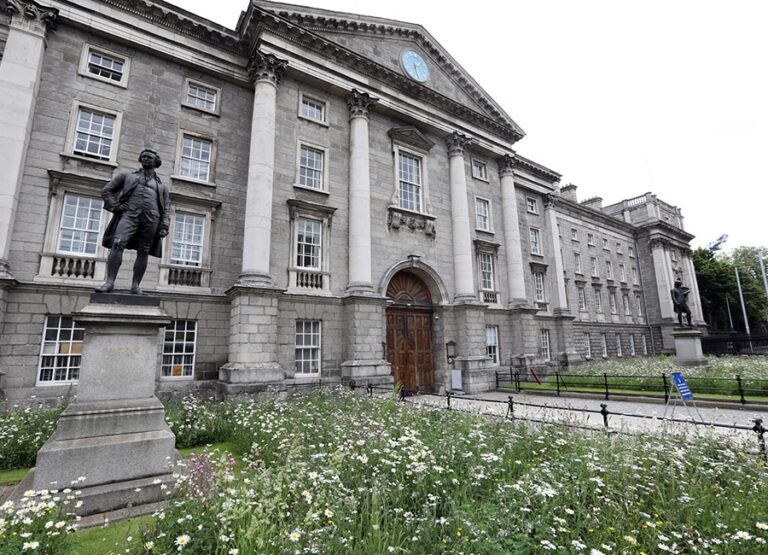
Trinity College Dublin, The University of Dublin

Founded in 1592, the University is steeped in history with a reputation for excellence in education, research and innovation. Located on an iconic campus in the heart of Dublin’s city centre, Trinity has over 18,000 undergraduate and postgraduate students across our three faculties – Arts, Humanities, and Social Sciences; Engineering, Mathematics and Science; and Health Sciences.

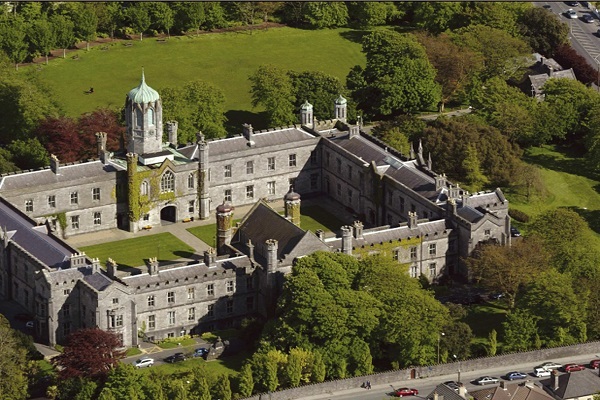
University of Galway

University of Galway has been inspiring minds since 1845 as a research-led university and is one of the oldest and largest universities in Ireland. We are an international university with global ambition, but with deep roots in Galway City and West of Ireland, renowned for its unique culture, creative industries, medical technologies, marine ecology and economy, and innovation.

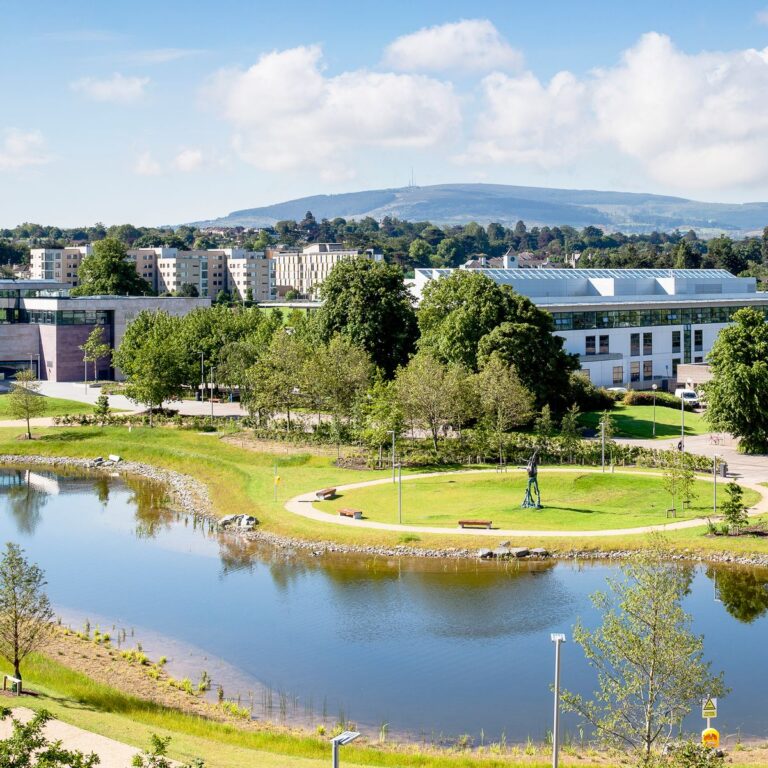
University College Dublin

University College Dublin is one of Europe’s leading research-intensive universities and is ranked within the top 1% of higher education institutions world-wide. In the 2021 edition of the QS World University Subject Rankings, UCD was named among the best universities globally in the study of 38 subjects.

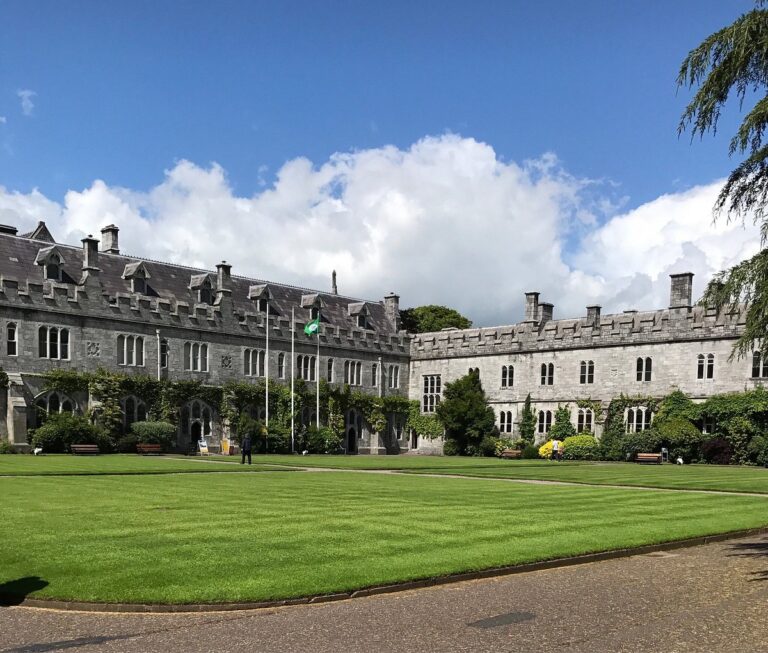
University College Cork

UCC is unrivalled in the quality of its academic programmes. Its courses are internationally recognised and some approximately 22,000 students take its undergraduate and postgraduate programmes. International students are part of a dynamic, multi-cultural community of scholars, academics and professionals. UCC enjoys a global reputation which draws 3,400 students from over 104 countries across the world. The university offers a research-led curriculum that attracts the highest calibre of Irish and international students.

Frequently Asked Questions (FAQs)​

1. Why should I choose Ireland for higher education?

Ireland offers world-class education, globally recognized degrees, an English-speaking environment, a safe and welcoming culture, and numerous job opportunities, especially in tech, pharmaceuticals, and finance.

Popular fields include Information Technology, Business, Data Analytics, Nursing, Engineering, Pharmaceuticals, and Hospitality Management.


Yes, most Irish universities require proof of English proficiency. IELTS, TOEFL, or PTE scores are accepted. Typically, a minimum of 6.0–6.5 IELTS band is required depending on the course and university.

Yes. International students can work up to 20 hours per week during the academic term and up to 40 hours per week during holidays.

Our

Partners

Our

Partners